Sticky Kurrajong / Kimberley Rose -Brachychiton viscidulus
Posted on
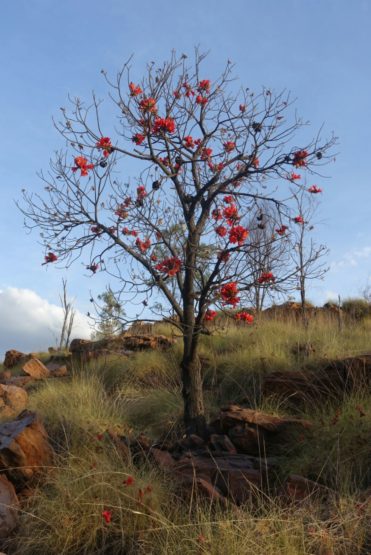
The Sticky Kurrajong, more famously known as the Kimberley Rose, is one of the most spectacular plants you’ll encounter in the Kimberley region of Western Australia. If you’re walking through El Questro or exploring gorges like Amalia Gorge, keep your eyes peeled — its vivid red flowers are often perched high on rocky slopes, creating a striking contrast against the deep blue Kimberley sky.
A Kimberley exclusive
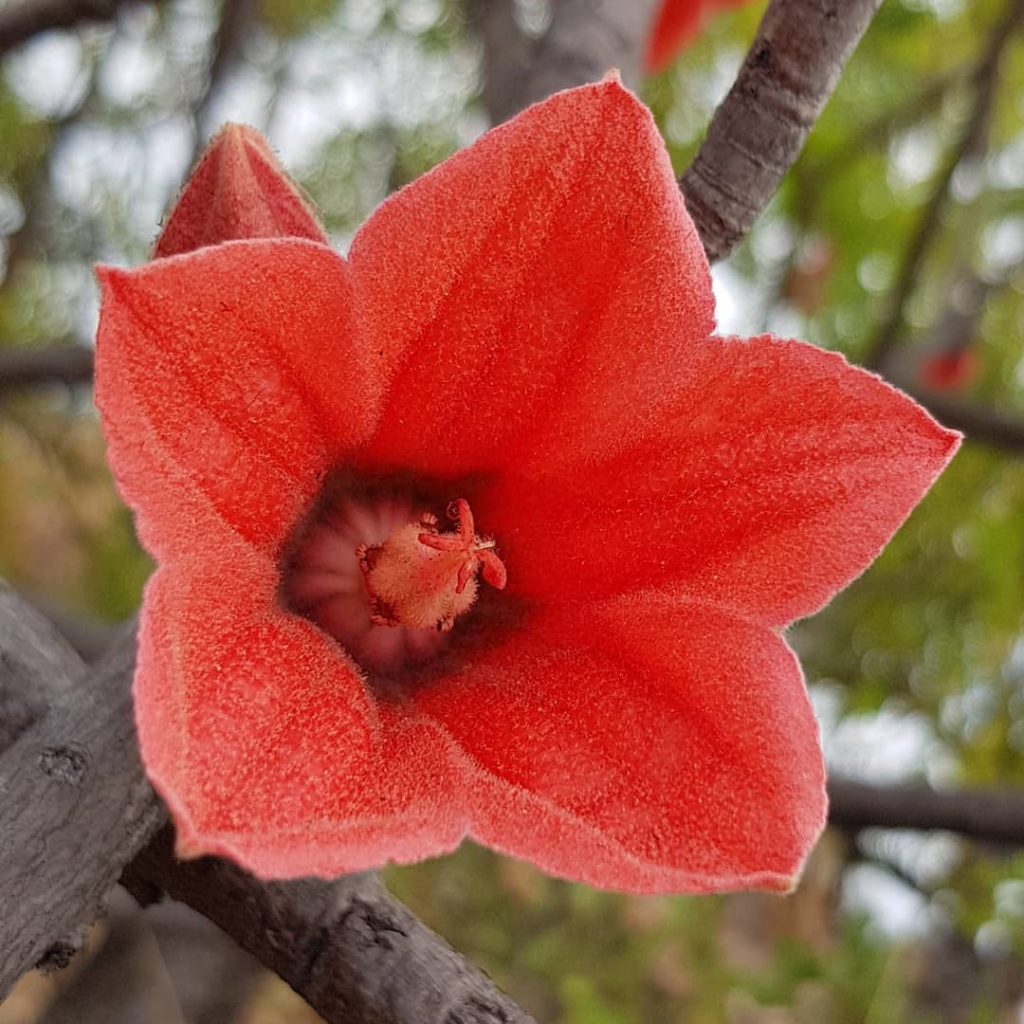
The Kimberley Rose (Brachychiton viscidulus) is found only in the Kimberley, making it a truly unique part of the region’s flora. A deciduous tree, it sheds its leaves in the dry season (May–October) and bursts into bloom with clusters of scarlet, trumpet-shaped flowers. The blossoms against the tree’s dark, twisted bark are a photographer’s dream and a highlight for many visitors exploring the Kimberley on guided tours.
Appearance and habitat
The Sticky Kurrajong grows between 2–10 metres tall and thrives in rocky hillsides, sandy soils, and gorge country. Its flowers create an unmistakable red display in winter, when much of the surrounding bush is muted in colour. As its name suggests, the tree produces sticky fruit pods, which hang in woody capsules and contain seeds covered in fine, irritating hairs.
Cultural and traditional uses
For Indigenous communities of the Kimberley, the Sticky Kurrajong has long been an important resource. The seeds can be eaten after the irritating hairs are burned off — either raw as a snack or roasted over coals and even brewed into a coffee-like drink. The fibrous bark has traditionally been used to make rope, while the roots can be eaten raw for sustenance. This combination of practical and nutritional uses has made the Kimberley Rose a valued plant for generations.
When to see it in bloom
The best time to spot the Kimberley Rose in full colour is during the dry season (winter months) when the tree has shed its leaves and the flowers dominate the landscape. This coincides with peak walking and touring season in the Kimberley, when trails are accessible and conditions are cooler for exploring iconic places like Emma Gorge, Amalia Gorge, and El Questro.
Why it’s worth looking out for
Few plants capture the spirit of the Kimberley like the Sticky Kurrajong. Its dramatic flowers, resilience in tough outback conditions, and cultural significance make it a standout feature of the region’s biodiversity. For walkers and photographers, spotting a Kimberley Rose in bloom is often one of the most memorable highlights of a Kimberley adventure.
Want to see the Kimberley Rose in its natural habitat?
Join our Kimberley walking tour, where you’ll explore gorges, escarpments, and remote wilderness with expert guides who know where these incredible trees thrive.
Check out our Kimberley Tour here

I’ve spent over 15 years designing, managing and guiding walking tours across Australia — from the outback to the coast. With a background in ecotourism and a deep love of the industry, I’ve helped shape hundreds of unforgettable journeys.