Hiking with Confidence: Practical Tips for Hikers in Their 50s and Beyond
Posted on
By Darren Edwards, Founder of Trail Hiking Australia
Hiking is a pursuit that only gets better with age. As we grow older, the frantic pace of our younger years often gives way to a deeper appreciation for the journey, a more profound connection to nature, and the patience to actually enjoy the view from the top. As a hiker in my 50s, I can tell you firsthand that our most rewarding adventures are not behind us.
However, hiking in our 40s, 50s, 60s, and beyond does require a shift in perspective. We may not recover as quickly, and those little aches demand more attention. Confidence on the trail is no longer about speed or ego; it’s about smart preparation, sustainability, and the self-assurance that comes from knowing your body and your gear.
Whether you’re planning a multi-day trek with a guided group or a challenging day hike on your own, here are my practical tips for hiking with confidence and joy for decades to come.
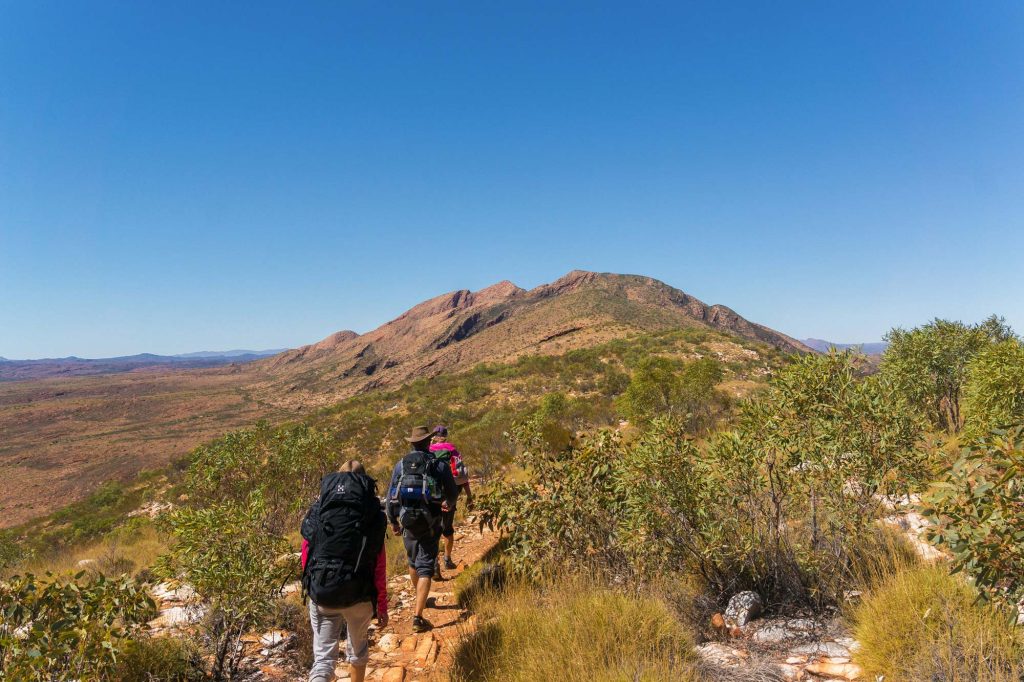
1. Redefine Your “Why” (The Mental Summit)
Before you even think about boots or backpacks, get your mindset right. Why are you out there? For me, it’s the mental clarity and the physical challenge. For you, it might be photography, nature, or shared time with friends.
Your “why” is the fuel that will power you up a steep climb when your legs are tired. It’s also the voice that gives you permission to slow down and enjoy the moment. Hiking is not a race; leave the urge to push for pace or distance to the 20-somethings, unless of course that’s your thing. Our goal is sustainability. The hiker who finishes the day strong, with energy to spare, and free from injury is the one who has truly succeeded.
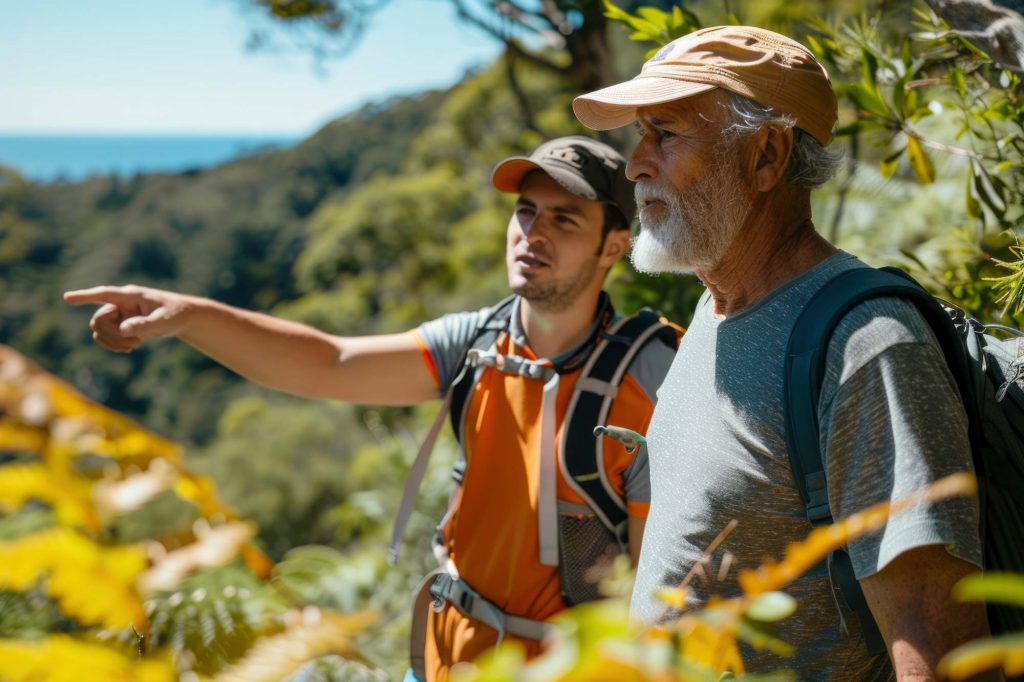
2. Build a Resilient Foundation (Physical Preparation)
Confidence on the trail is born from preparation. You can’t (and shouldn’t) go from the couch to a 20km mountain hike.
- Consistency Over Intensity: Forget the high-impact gym sessions. Your best training is walking. Start months in advance. Walk your local streets, find local hills, and gradually increase your distance.
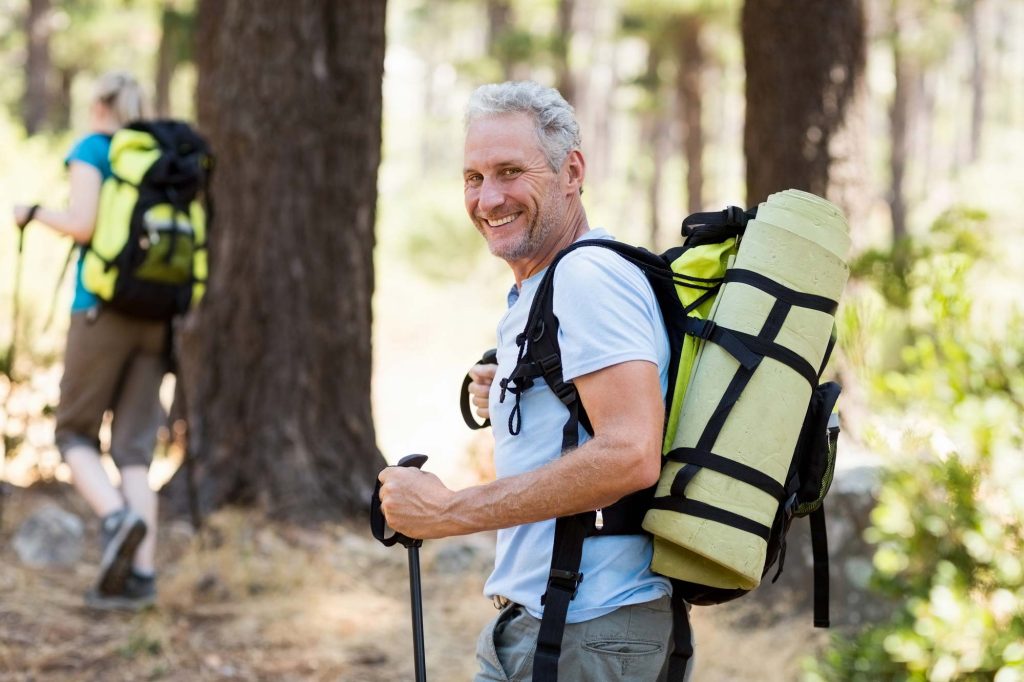
- Practice with Weight: Once you’re comfortable with the distance, start walking with the backpack you intend to use. Add 5-10kg of weight. This trains your shoulders, back, and core to handle the load and helps you identify any uncomfortable hotspots on your pack.
- The “Big Three” for Hikers:
- Strength: Your power comes from your legs and glutes. Bodyweight squats, lunges, and step-ups (even on your staircase) are perfect. They build the exact muscles needed for climbing and, just as importantly, controlling your descent.
- Balance: Uneven terrain is a fact of hiking. Good balance is your number one defence against falls. Practice standing on one leg while you brush your teeth. Consider simple yoga or Tai Chi to build core stability.
- Flexibility: Tight muscles lead to injury. Make stretching a non-negotiable part of your routine. Focus on your calves, hamstrings, and hip flexors after every walk.
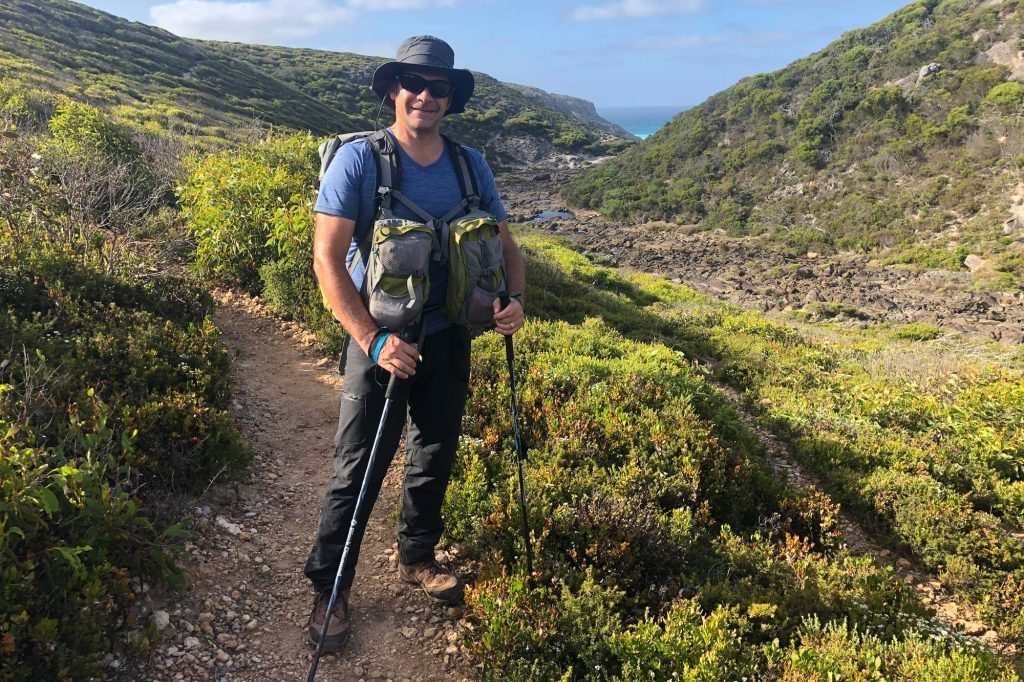
3. Listen to Your Body—No, Really Listen
This is perhaps the most critical skill for the mature hiker. We must learn to distinguish between discomfort and pain.
- Discomfort is muscle fatigue, being out of breath, or feeling tired. This is normal. You can manage this by slowing your pace, taking a short break, and focusing on your breathing.
- Pain is sharp, stabbing, or persistent. It’s often in a joint (knee, ankle, hip) or a specific, acute spot. This is your body’s stop sign. Pushing through pain is how a minor issue becomes a trip-ending injury. Stop, assess, and don’t be afraid to turn back. There is no shame in making a smart decision.
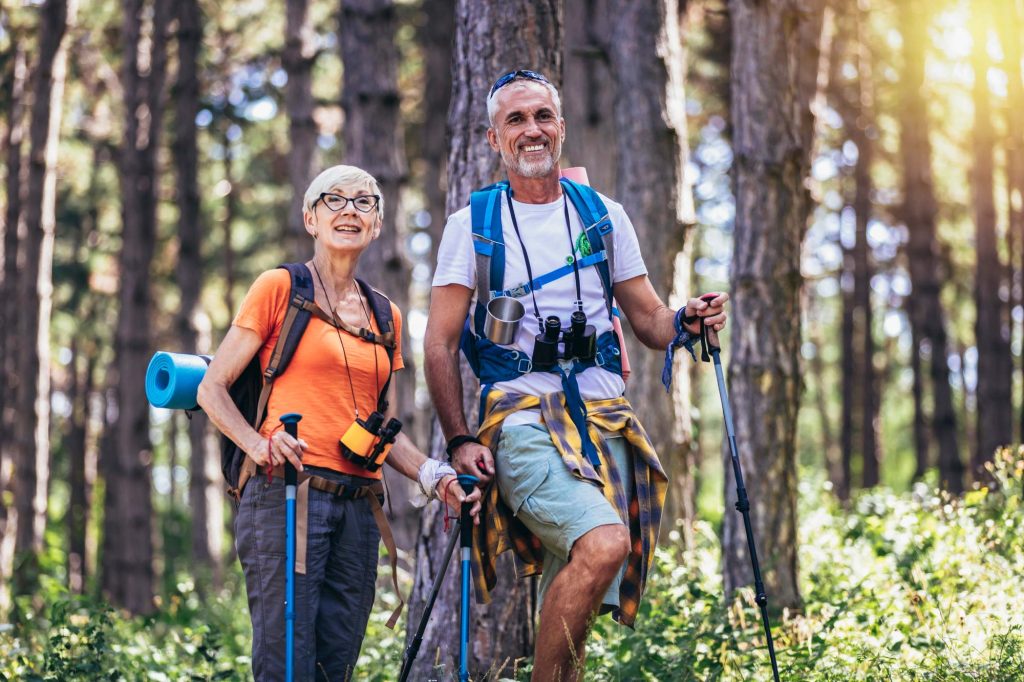
The right gear isn’t about status; it’s about function.
- Your Feet are Everything: Get your hiking boots or shoes professionally fitted. Your feet change over time, and what worked for you ten years ago might not be right today. Pair them with high-quality merino wool or synthetic hiking socks (not cotton) to prevent blisters.
- Embrace Trekking Poles: Forget any notion that poles are a “crutch.” They are essential tools. On ascents, they let you engage your arms to help pull you up. On descents, they act as a second pair of legs, absorbing up to 25% of the impact from your knees and ankles. They are an absolute game-changer for joint preservation and balance, and I use them on all my hikes.
- Pack Lighter, But Smarter: Every kilo on your back counts. You don’t need to skimp on essentials but be critical. Do you really need that heavy camera? Can you repackage food? That said, never compromise on your safety kit: a good first-aid kit, waterproof rain gear (top and bottom), a headlamp, navigation tools, and an emergency beacon (like a PLB) if you’re hiking independently in a remote area.
5. Find Your Rhythm: Independent vs. Guided
How you hike can also build confidence.
Hiking Independently: This offers incredible freedom but demands total self-reliance. You are responsible for your navigation, your food, your pace, and your own emergency response. It’s deeply rewarding, but it requires a high level of preparation and experience.
Hiking with a Guided Group: For many, this is the ideal way to tackle more ambitious trails. A guided trip — such as those offered by Inspiration Outdoors — removes the logistical stress of transport, food, and accommodation. Professional guides manage safety, navigation, and group pace, while sharing their local knowledge of the history, flora, and fauna. This frees you to focus purely on the experience of walking, building your confidence in a supported environment, and enjoying the camaraderie of like-minded people. It’s a fantastic way to enjoy the challenge without bearing all the responsibility.
6. Recovery is Part of the Adventure
As we age, recovery is as important as training. We need to actively plan for it, just as we plan our route. Prioritise rest days, good sleep, and nutrition rich in protein and hydration to help your muscles repair. A gentle stretch or a short, easy walk the day after a big hike is often more beneficial than sitting still, as it keeps joints supple and prevents stiffness. Listening to your body doesn’t stop when you take your boots off.
Your Best Hikes Are Still Ahead
Hiking in your 50s and beyond isn’t about limitations. It’s about leveraging your experience, adopting a smarter approach to preparation, and respecting your body. By building your mental and physical readiness, you can find a sustainable rhythm that allows you to enjoy the trail with confidence. Whether you find confidence in solitude or in the camaraderie of a group, every hike reminds us that we belong — to nature, and to a community of walkers who share its joy.
The tracks and trails are waiting. See you out there.
Darren Edwards is the founder of Trail Hiking Australia, a comprehensive online resource dedicated to supporting and inspiring self-reliant hikers. As a passionate hiker in his 50s, he focuses on providing practical advice on preparation, safety, and mindset for walkers of all experience levels.